ServicesSolar Repair
Solar Repair in Garland
When your system stops producing or your monitoring app shows a fault, we find the actual cause before touching anything. Then we repair it with the same care for connectors, wiring and seals that a good installation deserves, so the fix holds.
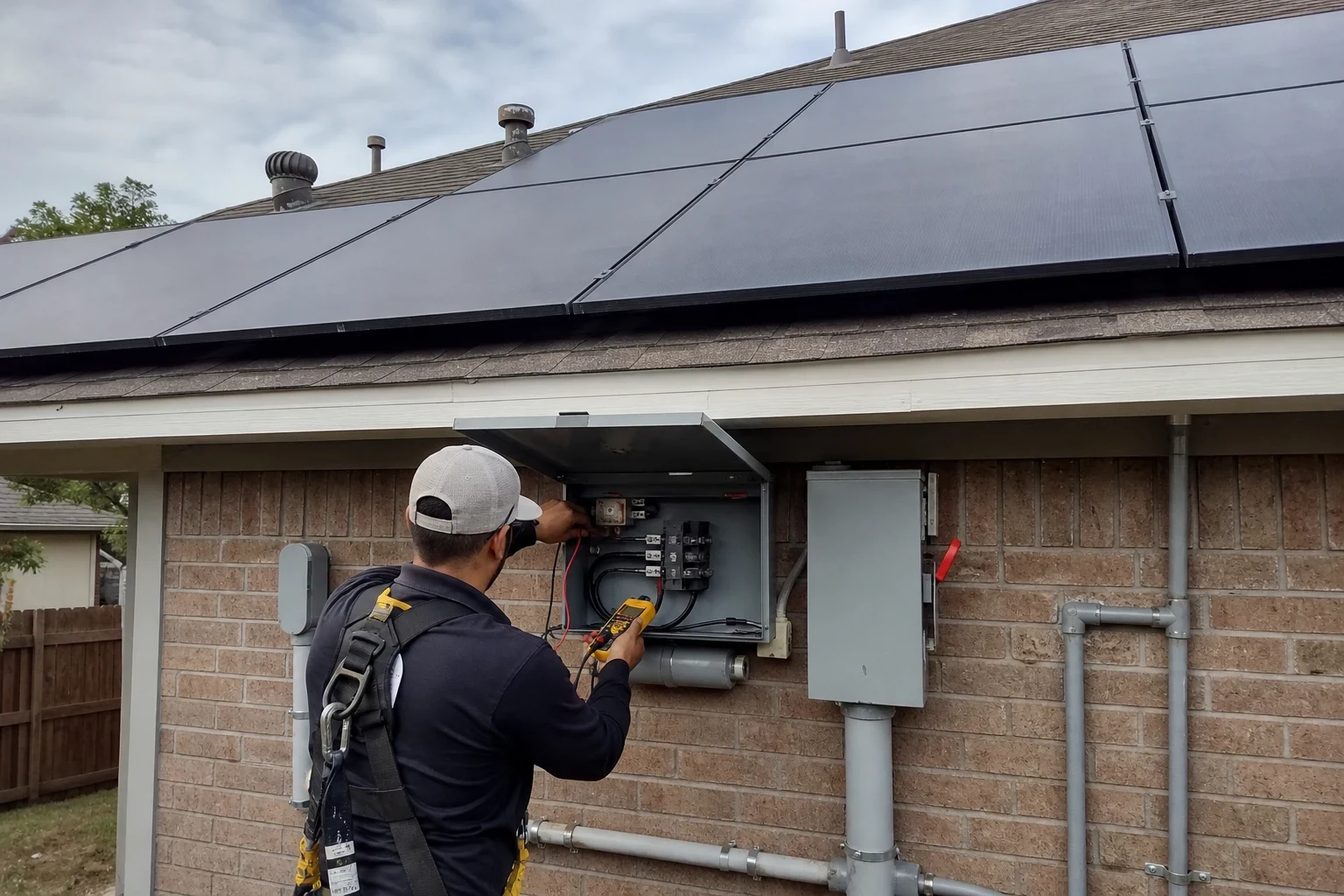
Repair that starts with an honest diagnosis
Most solar problems come down to a small number of parts: the inverter, the connectors between panels, the wiring runs, the mounts that hold everything to your home, and occasionally a panel itself. A replacement part fixes the symptom. Finding out why that part failed is what keeps you from calling again next spring.
We work on systems we installed and systems we did not. Some older installs were rushed, with wiring left hanging under the array or connectors from mismatched brands snapped together. We point out those details when we see them and explain which ones matter now and which can wait.
If a repair no longer makes sense for an aging system, we say so plainly and show you why. Sometimes the better answer is new equipment through our solar panel installation service, but most calls end with a straightforward fix.
What a solar repair visit covers
Inverter and optimizer diagnosis
We read the fault codes, check input and output voltages, and confirm whether the inverter, a microinverter or an optimizer is the real problem. Many faults that look like a dead inverter turn out to be a wiring issue upstream.
Connector and wiring repair
Loose, corroded or mismatched connectors cause heat, lost production and ground faults. We replace them with matched parts, crimped with the correct tool, and secure the wiring off the roof surface so it stops rubbing.
Pest damage and critter guards
Squirrels and birds like the shaded space under panels and will chew through the outer jacket on solar wiring. We repair the damaged runs, clear any nesting, and can fit mesh guards around the array edge to keep them out.
Damaged panel replacement
After a North Texas hailstorm, a cracked panel can still look fine from the ground. We test output panel by panel, replace the ones that have failed, and match the replacement as closely as the available models allow.
Mount and penetration resealing
If a solar mount is letting water in, we lift the affected panels, reseal or reflash the attachment point, and reinstall. This work is limited to the solar mounts themselves.
Photos and a written explanation
You get photos of what we found and a clear note on what we repaired, so you are not left taking our word for it.
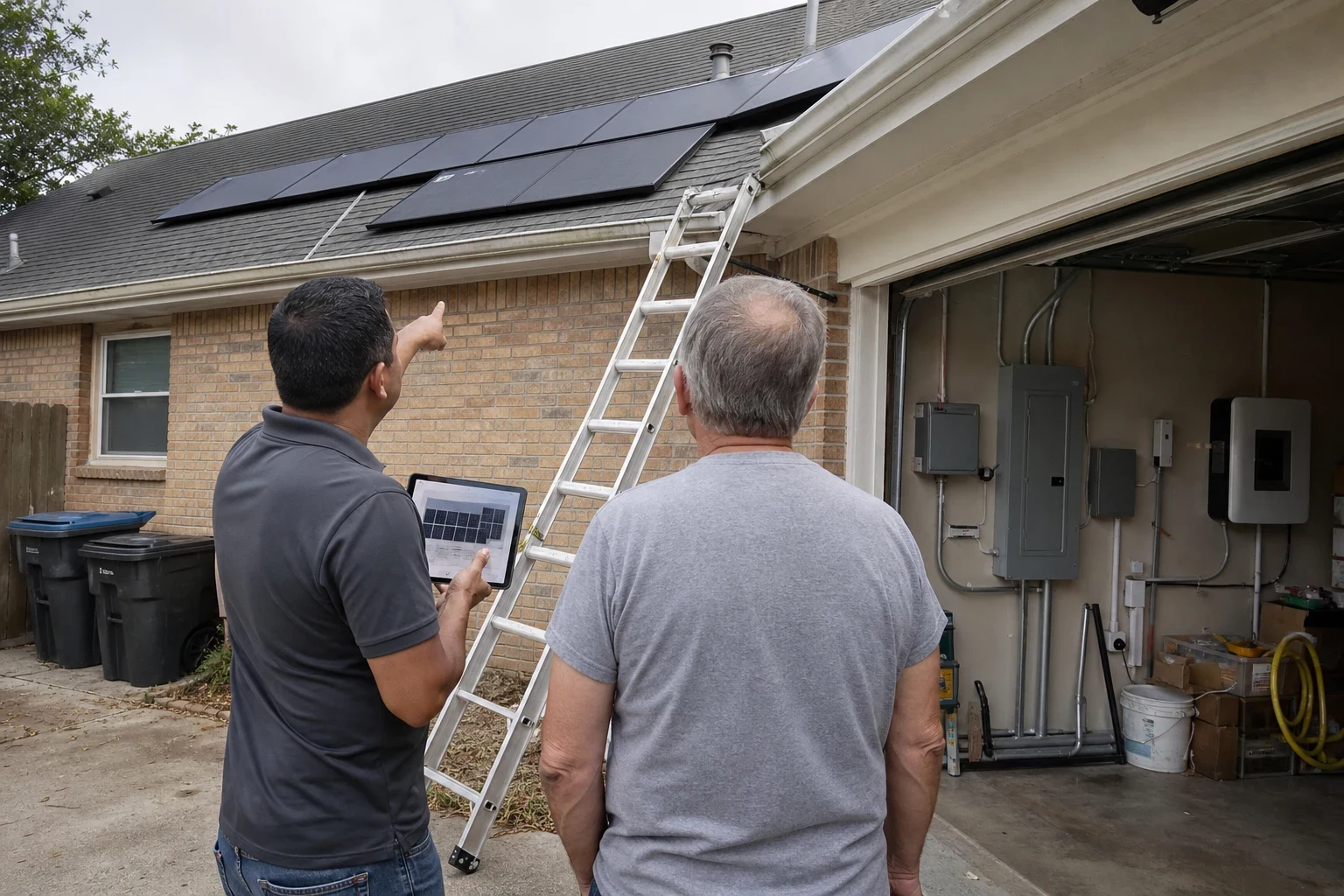
Signs your system needs a repair
- Production has dropped
- Compare this month to the same month last year in your monitoring app. A steady decline beyond normal weather swings usually points to a failing component or connection.
- A fault light or error code
- A red or amber light on the inverter, or an alert in the app, means the system has detected something it cannot work around. Note the code before you call.
- A breaker that keeps tripping
- If the solar breaker trips repeatedly, do not keep resetting it. Repeated trips often mean a ground fault or a damaged wire that needs attention.
- Wires hanging below the array
- Loose wiring sags, rubs against shingles and wears through its jacket over time.
- A ceiling stain under the array
- A water mark below where panels sit can mean a mount seal has failed. Catching it early keeps the repair small.
How a repair visit runs
- 1
A conversation by phone
We ask what you are seeing, what equipment you have, and for any fault codes or monitoring screenshots. That tells us which parts and test equipment to bring.
- 2
Safe shutdown and testing
We shut the system down in the correct sequence, then test at the inverter and on the roof. Our crews work under the safety practices that earned us the Liberty Mutual Platinum Safety Award, which matters most when we are on your roof around live equipment.
- 3
Findings before work
We show you photos, explain the cause, and tell you what the repair involves and costs before we start. You decide.
- 4
Repair and verification
We make the repair, restart the system, and confirm it is producing as it should. We clean up wire offcuts and old parts before we leave.
What decides the cost of a solar repair
Until the system has been tested, nobody can say what the fix involves, so a repair is harder to price in advance than a new install. Once we have found the cause, you get a written price for the work before anything is touched. Four things shape that number.
- Which component failed
- A replaced connector costs far less than a new string inverter. Microinverter systems sit in between, depending on how many units need attention.
- Access to the problem
- A fault at a ground-level inverter is quick. A fault under the middle of an array on a steep two-story roof means removing panels to reach it.
- Parts availability
- Some older inverters and panels are discontinued. Finding a compatible replacement can take more time and cost more.
- Manufacturer coverage
- Many panels and inverters carry manufacturer warranties. If yours qualifies, we help gather the serial numbers and test results the manufacturer asks for, which can reduce what you pay.
Solar repair questions
- Do you work on systems that someone else put in?
- Often, yes. Most panel and inverter brands found on homes around here are familiar to us, no matter whose crew mounted them. Even when the original installer has closed, the serial numbers usually let us identify the equipment and check what manufacturer coverage still applies.
- How do I know whether the problem is the panels or the inverter?
- Panel-level monitoring helps, but often you cannot tell from the ground. Inverters fail more often than panels, and we test both before naming the cause.
- My panels were hit by hail. Is that a repair or an insurance claim?
- It can be both. We inspect and document the damage with photos and output readings, which you can share with your insurer. The adjuster decides coverage; we handle the repair.
- Can a dirty array look like a fault?
- Sometimes. Heavy dust or pollen lowers output but rarely triggers an error code. If testing shows the equipment is fine, panel cleaning may be all you need.
- Should I add a battery while you're repairing the system?
- Fix the existing problem first. Once the system is producing properly, we can talk through battery storage separately if backup power interests you.
Bring your system back to full output
Let us know what your inverter or monitoring app is reporting, and we will walk you through what we would test and what a repair visit looks like.