ServicesRoof-Mounted Solar
Roof-Mounted Solar in Garland, TX
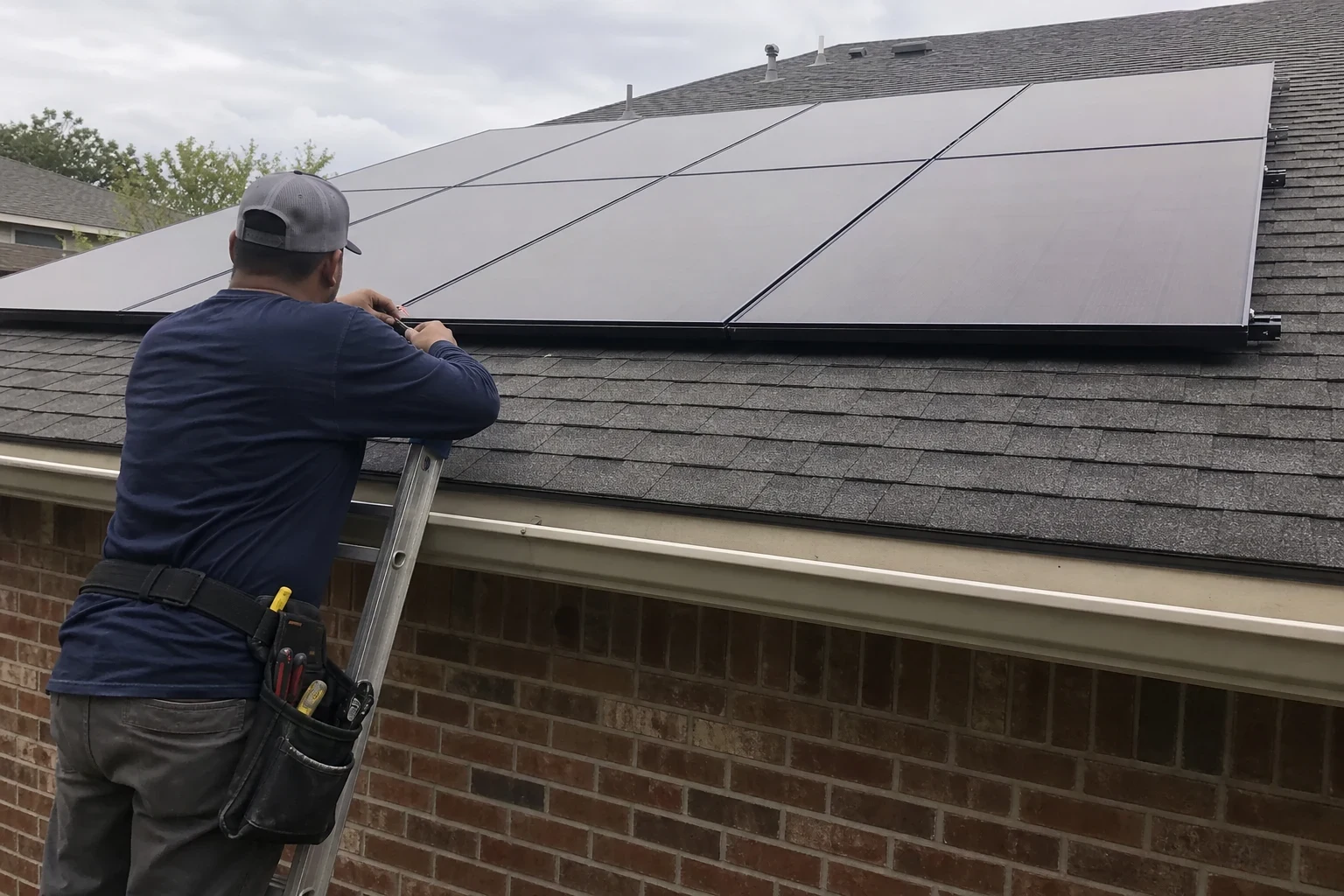
We mount solar on your roof the way it should last: every bolt in a rafter, every attachment flashed under the shingles, and every wire held clear of the roof surface. You get a clean, quiet array that makes power and keeps your roof dry.
How a Roof Array Lasts
A roof-mounted system puts your panels on the surface that already gets the most sun, without giving up any yard. The panels themselves rarely fail. What decides how long the system lasts is how it meets the roof: the lag bolts that find the rafters, the flashing that sheds water around each penetration, and the wire runs that stay off the shingles.
We plan those details before a single rail goes up. Most homes in Garland have composition shingle roofs that see hail and long summer heat, so we choose attachments and sealants that hold their shape through both. When the shingles have only a few seasons left in them, we tell you that up front and suggest a new roof before the array goes on, because taking panels down and resetting them later adds cost.
If you are still comparing panel types and system sizes, our Solar Panel Installation page covers equipment and design in more depth.
What the Work Includes
- Rafter-located attachments
- We locate each rafter instead of guessing from spacing, then set lag bolts to the depth the mount calls for. A mount that only catches the roof deck can loosen and pull at the sheathing over time.
- Flashed penetrations
- Every attachment gets a flashing plate slipped under the shingle course above it, so water runs over the mount rather than into it. Sealant is a second layer of defense, never the only one.
- Considered rail and module layout
- Rails are laid out to respect fire setbacks at ridges and edges, with rows kept straight and evenly spaced. A clean layout is easier to service and looks finished from the street.
- Wire management
- Conductors are clipped to the rails and kept off the roof, and conduit is routed neatly along the eaves down to your equipment. Loose wire rubbing on shingles is one of the most common causes of faults years later.
- Equipment grounding
- Every rail and module frame is tied into the grounding system to code, so the array is safe to touch, inspect and service.
- Permit, inspection and utility paperwork
- We pull the permit, meet the inspector, and prepare the interconnection paperwork your utility needs before the system can be switched on.
Signs Your Roof Is a Good Fit
Open south or west roof planes
Broad roof sections facing south or west with little shade from trees or neighboring houses produce the most power through the day.
Summer bills that climb every year
If air conditioning drives your bill up each summer, panels make the most power during exactly those long, bright months.
A roof with years of life left
Shingles that lie flat, with no curling, bald spots or soft decking, are ready to carry an array. We check this in person rather than assuming.
Little room for anything on the ground
Smaller lots, pools and mature landscaping often leave the roof as the only sensible place for panels.
Stains under an older array
Ceiling stains below existing panels usually point to a mount that was never flashed. Our Solar Repair page explains how we reseal or reset those attachments.
Where the Cost Comes From
No two roofs carry an array the same way, so the figure we give you comes from measuring and inspecting yours. Your written estimate lists each part of the job on its own line, from attachments to permit fees. A short phone conversation is usually enough for us to say which of the factors below will weigh most on your home.
System size
More panels mean more rails, attachments and wiring. We size to your usage, not to the largest array the roof can hold.
Roof pitch, height and planes
Steep or two-story roofs need more safety setup and time. Splitting an array across several roof planes adds attachments and conduit runs.
Roof material and condition
Composition shingle is the most straightforward to work with. Tile, metal or worn decking calls for different mounts and more careful handling.
Electrical panel capacity
An older or full electrical panel may need an upgrade before the system can tie in, which we identify during the assessment.
From First Call to Switch-On
- 1
Roof and attic assessment
We measure each roof plane, look at shading, and check the shingles and decking. Where we can, we look in the attic to confirm rafter size and spacing.
- 2
Design and permit
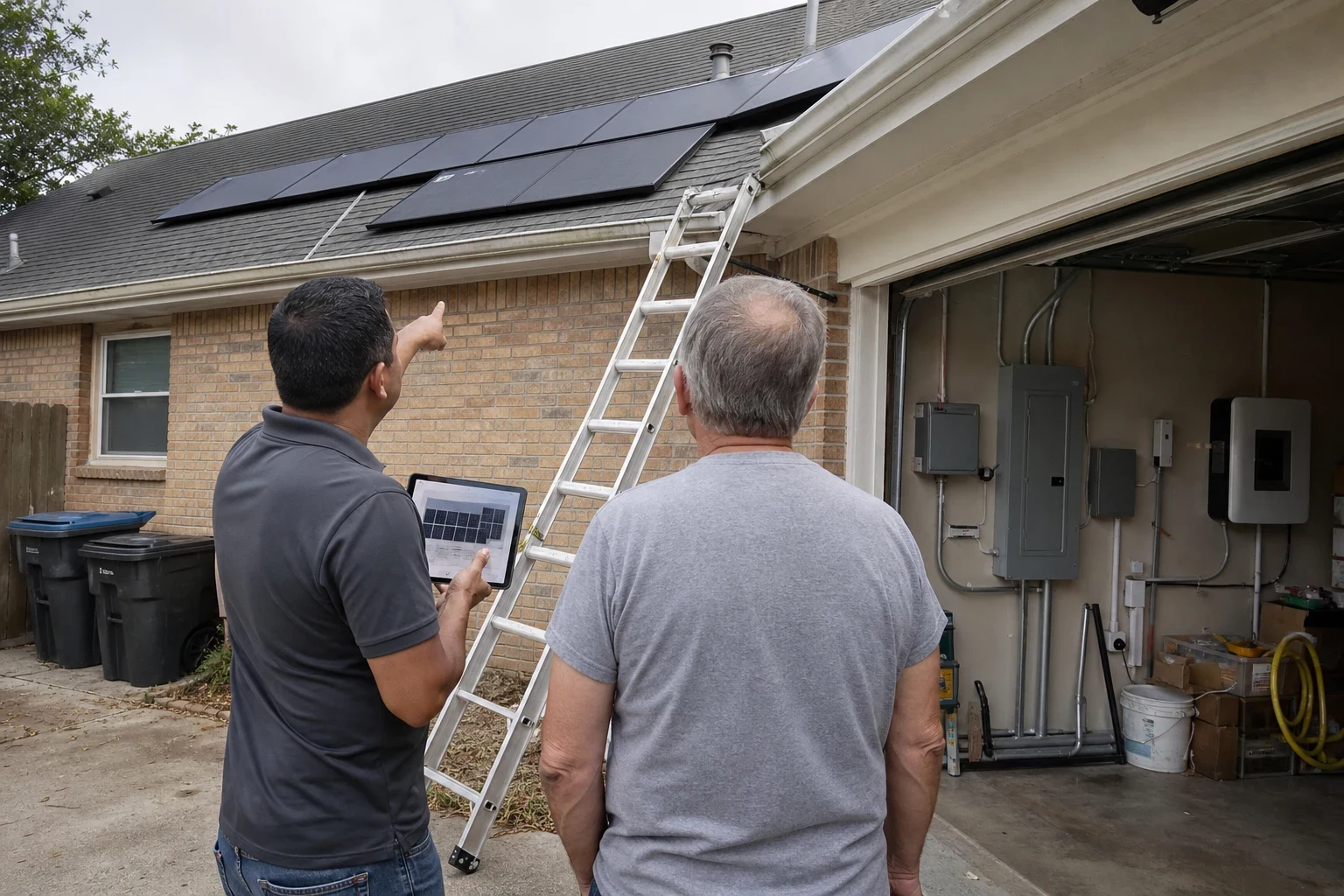
You see a layout showing where every panel and conduit run will sit before we file the permit. Changes are easy at this stage and costly once rails are on the roof.
- 3
Installation on the roof
Our crew works tied off on every roof, a habit that has earned us the Liberty Mutual Platinum Safety Award. We protect beds and walkways below, keep the work area tidy, and run a magnetic sweep for stray screws before we leave.
- 4
Sign-off and first power
Once the inspector signs off and your utility grants permission to operate, we start the system with you standing beside us. We also show you where to check daily production so you know it is working.
Questions About Panels on Your Roof
Could a roof array lead to leaks?
Not when every attachment is bolted into a rafter and flashed beneath the shingle above. Most leaks we find on older systems come from mounts that depended only on sealant. We flash each penetration and photograph the attachments for you before panels go over them.
What if my roof needs replacing down the road?
The panels can be removed and reinstalled so the roofer can work. That adds cost, so we check your roof's age carefully before installing and let you know if a new roof first is the better plan.
Will hail damage my panels?
Panels have tempered glass rated to withstand hail, and most storms do them no harm. If a severe one does damage the array, we can inspect it and record what we see. We can explain how insurance claims usually go, but your adjuster decides what is covered.
How long will the crew be on my roof?
Most home systems take a day or two, depending on the size and how many roof planes are involved. Permits and utility approval take longer than the install, and we keep you informed through both.
Can a battery be added to a roof array?
Yes. It can go in with a new system or be added later. Our Battery Storage page explains how it saves daytime power for evenings and outages.
Start With a Careful Look at Your Roof
Share roughly how old your roof is and what your summer usage looks like, and we can talk through whether it suits solar and how a layout might sit on it.