ServicesPanel Cleaning
Garland Solar Panel Cleaning
Your panels are washed by hand with purified water and soft brushes, which is how the glass and its coatings should be handled. While on the roof, we also check the wiring, clamps and panel edges so small issues are caught early.
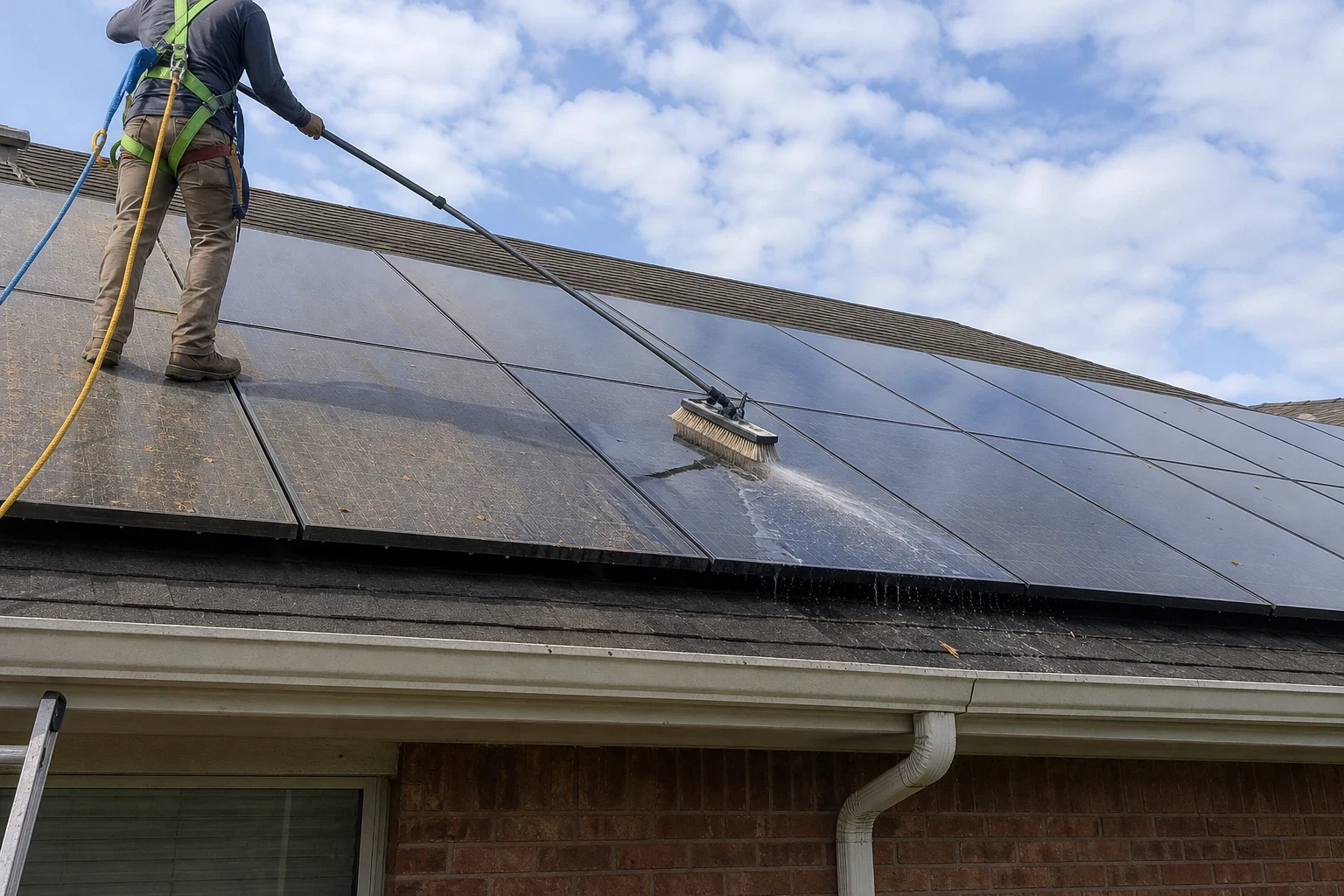
A gentle cleaning that protects the glass
Solar panels shed some dirt on their own, but not all of it. Fine dust, spring pollen and bird droppings settle into a film that rain rarely clears, especially through a dry North Texas summer. That film cuts how much light reaches the cells, and the loss adds up month after month.
How the cleaning is done matters as much as doing it. Pressure washers can force water past frame seals, hard tap water leaves mineral spots that bake onto the glass, and household detergents can strip the anti-reflective coating. We use purified water that dries clear, soft-bristle brushes and a light hand. It takes a little longer, and it leaves your panels as the manufacturer intended.
What a cleaning visit includes
- Purified-water wash
- We rinse and brush with filtered, deionized water. It lifts grime without soap and dries without the white spotting that Garland tap water leaves behind.
- Soft-brush detailing
- Bird droppings and baked-on pollen get extra time with a soft brush. We work the edges where dirt collects along the lower frame, since that strip shades the bottom row of cells first.
- Visual check of the array
- We look for cracked glass, discolored cells, loose clamps and wiring that has slipped from its clips. Anything we find is photographed so you can see it for yourself.
- Under-array inspection
- We check the gap beneath the panels for leaves, debris and signs of nesting birds or squirrels. Chewed wire is easier and cheaper to deal with when caught early.
- Before-and-after notes
- If you have a monitoring app, we can compare output before and after the cleaning with you. Either way, you get a short summary of what we saw.
When your panels need cleaning
Production is slipping over time
A slow decline on clear days without any error codes usually means dirt on the glass, not a failed part.
A film is visible from the yard
Glass that looks cloudy, coated yellow with pollen or streaky after dusty days is letting less light through to the cells.
Droppings on the panels
A handful of spots still casts small patches of shade. Leave them long enough and they can drag down a full string of panels.
A grime line at the lower frame
A dark strip where rainwater drains and dries is a typical sign of dirt collecting along the frame.
No cleaning in the past year
Most local arrays gain from a yearly cleaning, often after spring pollen or the dust of late summer.
What affects the cost of panel cleaning
Every visit is priced on your system and your roof, not a flat number that ignores the details. We explain the price by phone before we schedule, so there are no surprises on the day.
Number of panels
More panels mean more time on the roof. This is usually the biggest single factor.
Roof pitch and height
A steep or two-story roof needs more setup and safety equipment than a low, gentle one.
How dirty the glass is
A light dust film goes quickly. Years of buildup or heavy droppings take extra passes with the brush.
Debris beneath the array
Clearing packed leaves or nesting material from under the panels adds time, and we will tell you if we find it.
How the cleaning day goes
- 1
A conversation by phone
We ask about your system, roof pitch, the number of panels and any output changes you have noticed. Then we set a time that suits you.
- 2
Cool glass first
We schedule early in the day when we can. Spraying cool water on glass that has been baking in the afternoon sun puts needless stress on it.
- 3
Safe roof access
We set ladders and fall protection before anyone steps onto the roof, and we never walk on the panels themselves. We hold the Liberty Mutual Platinum Safety Award, and careful roof work is a large part of why.
- 4
Wash, brush and inspect
We clean row by row, then go back over the array to check frames, clamps and wiring with the glass clear enough to see properly.
- 5
Walkthrough and cleanup
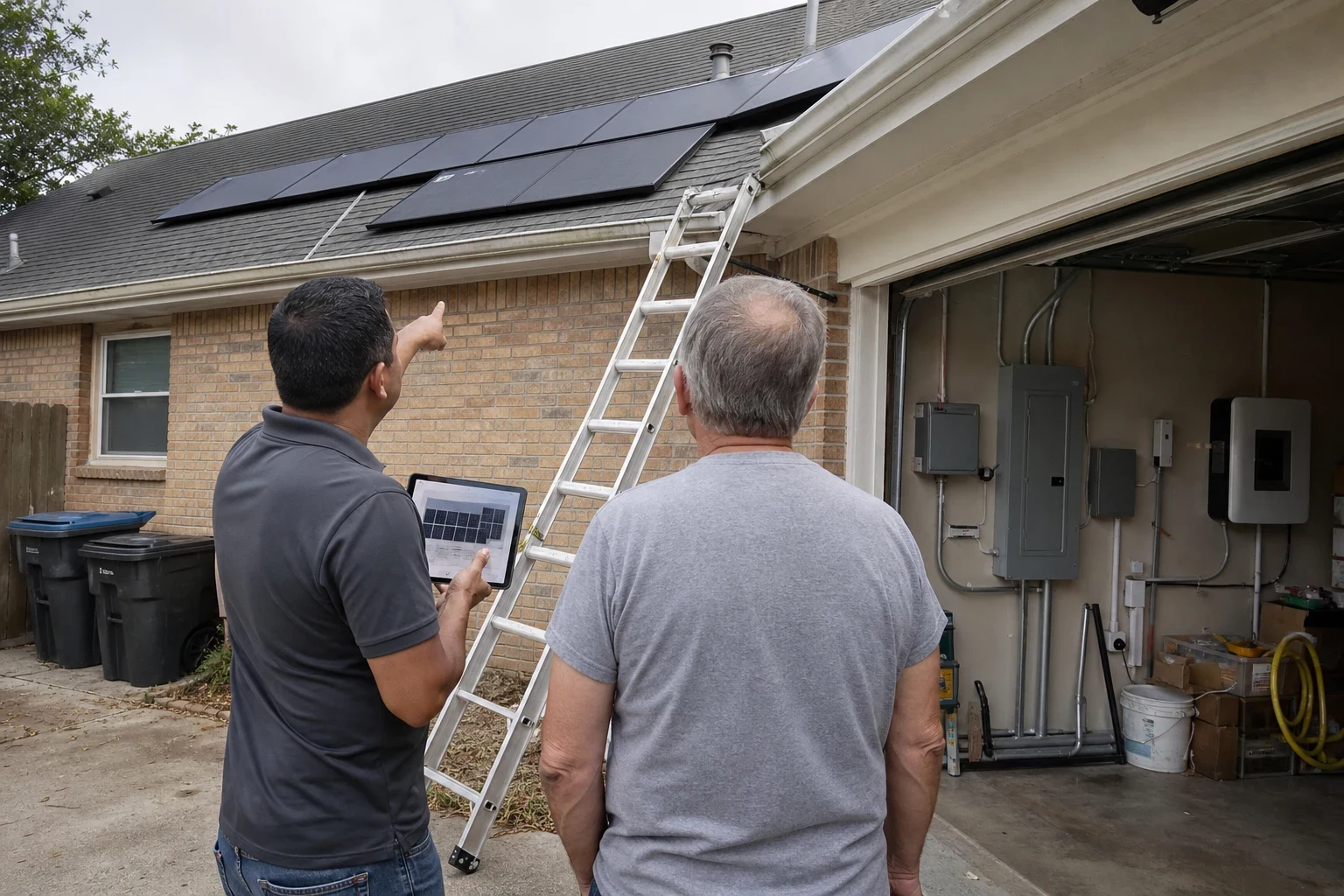
We rinse any runoff from walkways and planting beds, pack up and show you our photos and notes before we leave.
Questions about panel cleaning
Is hosing down my panels enough?
Rinsing from the ground helps some. But Garland tap water is hard and tends to leave mineral spots as it dries in the sun. Getting on the roof to scrub is where most damage and injuries occur, so we recommend leaving that to us.
Will cleaning affect my panel warranty?
Not with a gentle method. Panel makers usually tell owners to skip high pressure, abrasive tools and strong cleaners, and we use none of them, only deionized water and soft bristles. If your manufacturer has its own care instructions, we are happy to go through them with you beforehand.
How often do panels around here need cleaning?
Most homes do well with once a year. Near open fields, construction or heavy tree cover, twice a year can pay off. Your monitoring numbers will tell you best.
What if you spot damage?
We take photos and explain what we found in plain words. If it needs fixing, our solar repair service can take care of it on another visit, and the choice to proceed is yours.
Do I need to be home during the cleaning?
No. As long as we can get on the roof and either use an outdoor faucet or park our water rig nearby, we can do the job while you are out. Many owners still like to be there at the end to go over the photos and notes with us.
Clear glass and a careful look at the details
Tell us about your system and roof, and we will explain the price and find a time that works. The cleaning and the inspection happen in the same visit.