Garland, TX
Solar for Your Home in Garland, Installed With Care
We design and install solar panels, roof-mounted arrays and battery storage, then keep them working with repair and panel cleaning. Every mount is flashed and sealed, every wire run is secured and labeled, and the finished system looks like it belongs on your home in Garland, Rowlett or Sachse.
- Written line-item estimates
- Flashed and sealed mounts
- Permits and paperwork handled
- Photos of finished work
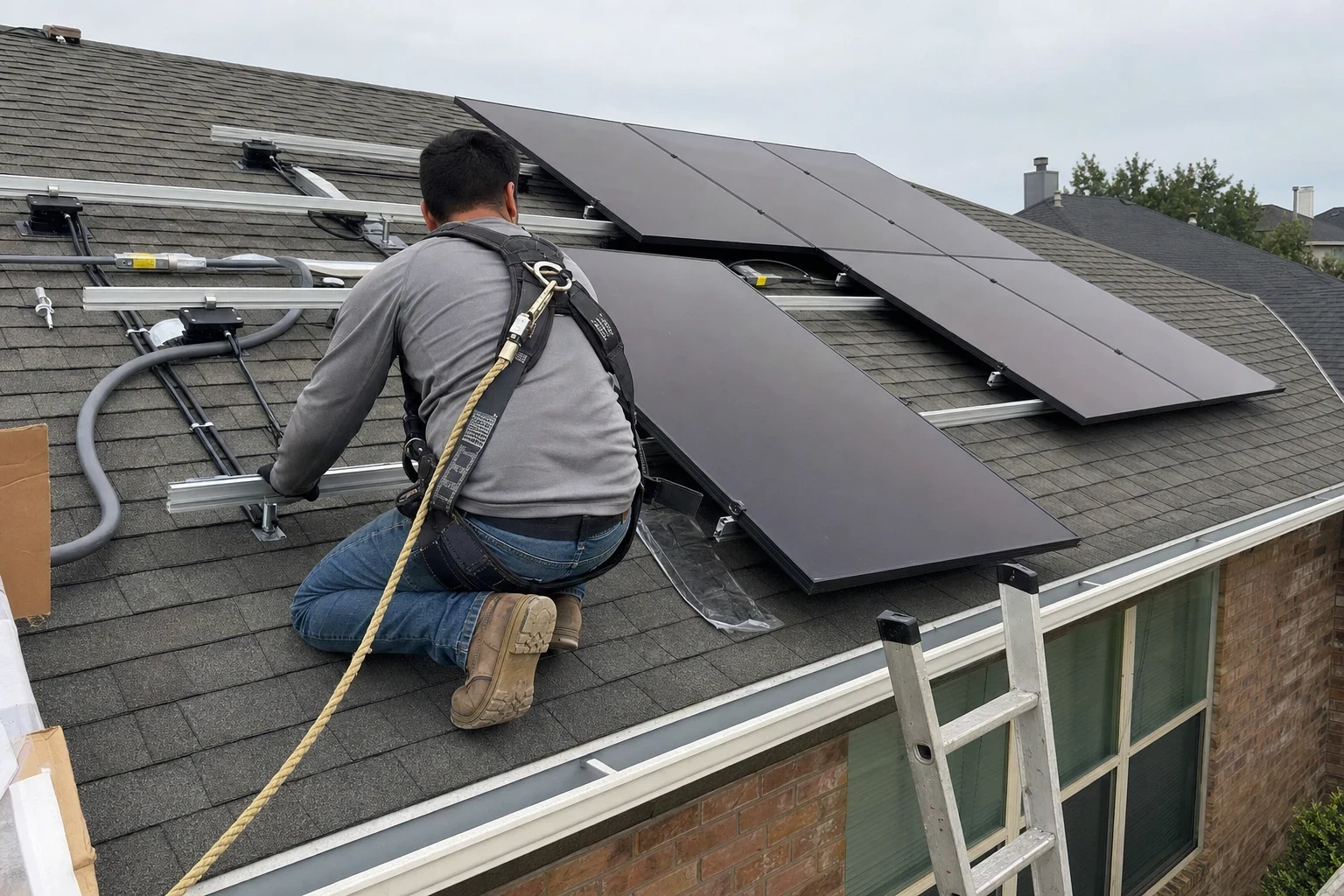
What We Install and Look After
Our main work is solar panel installation and roof-mounted solar, sized to your roof, your yearly electric use and how long you plan to live in your home. Battery storage comes next, for homeowners who want backup during outages or more say over when they draw on their own power. We also take on solar repair and panel cleaning for existing systems, even ones a different installer put up.
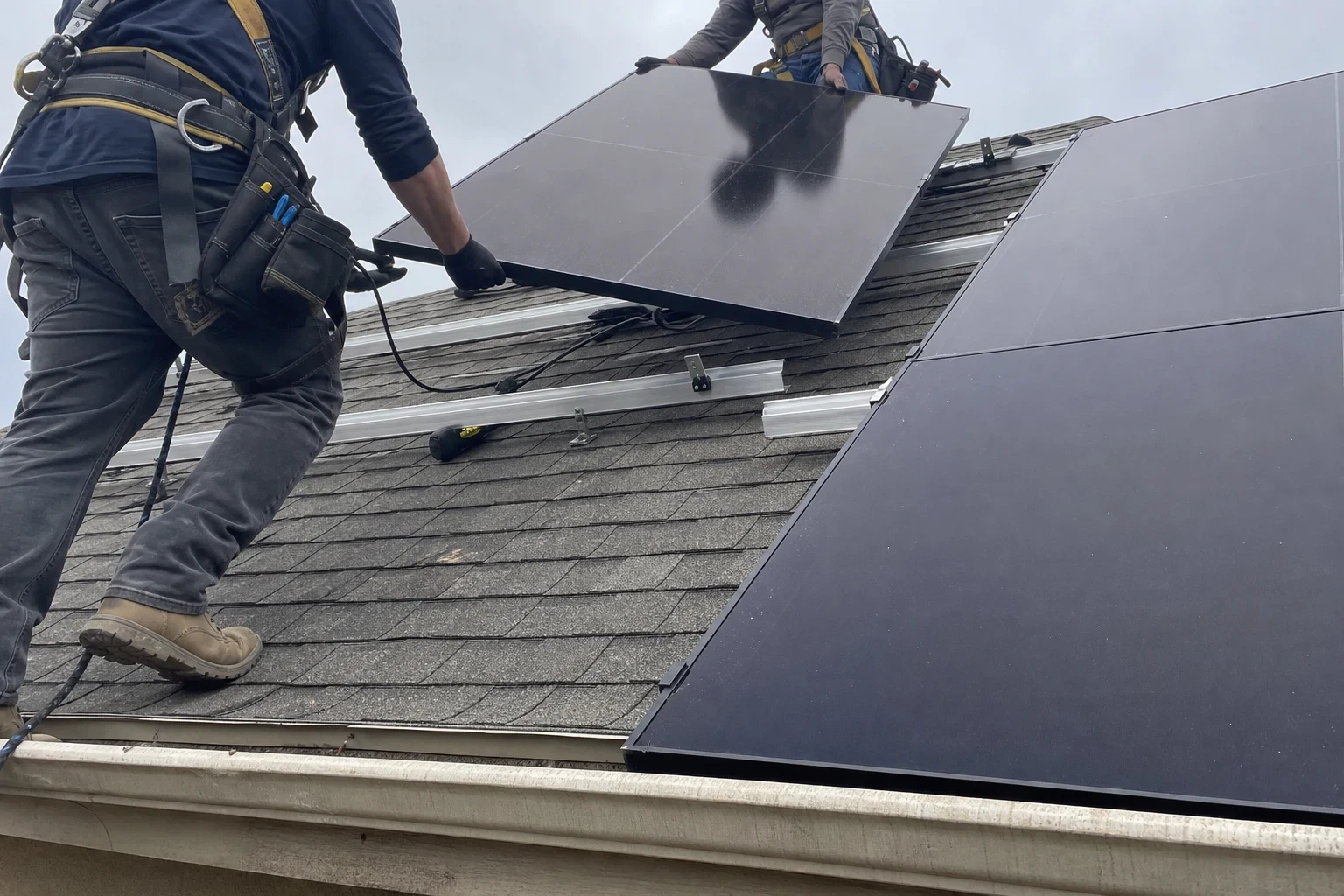
Solar Panel Installation
Complete rooftop solar systems for your home, from layout and permits to flashed mounts, clean conduit runs and utility approval.
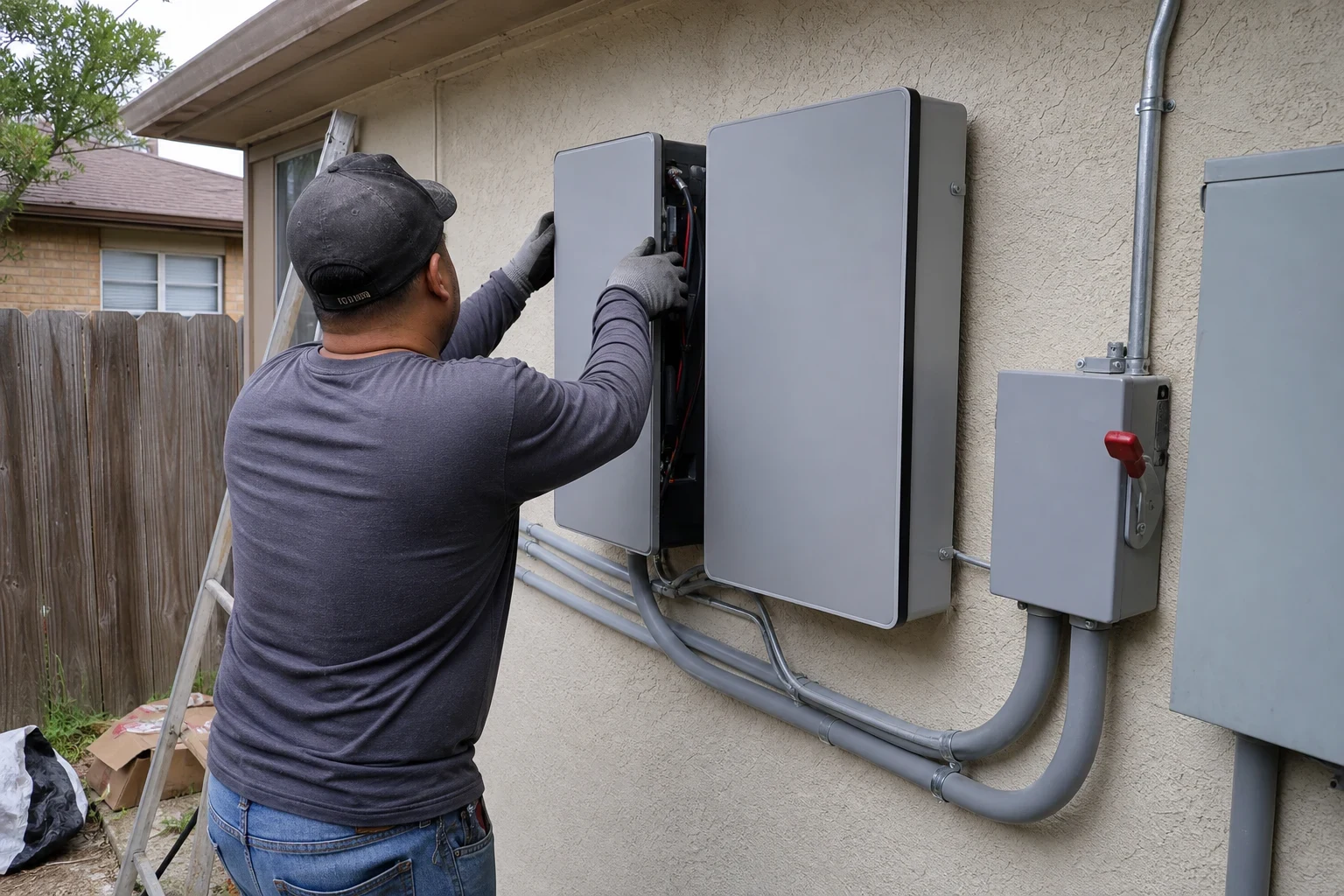
Battery Storage
Home batteries that store your solar power and keep chosen circuits running in an outage, mounted and wired with care so they work for years.
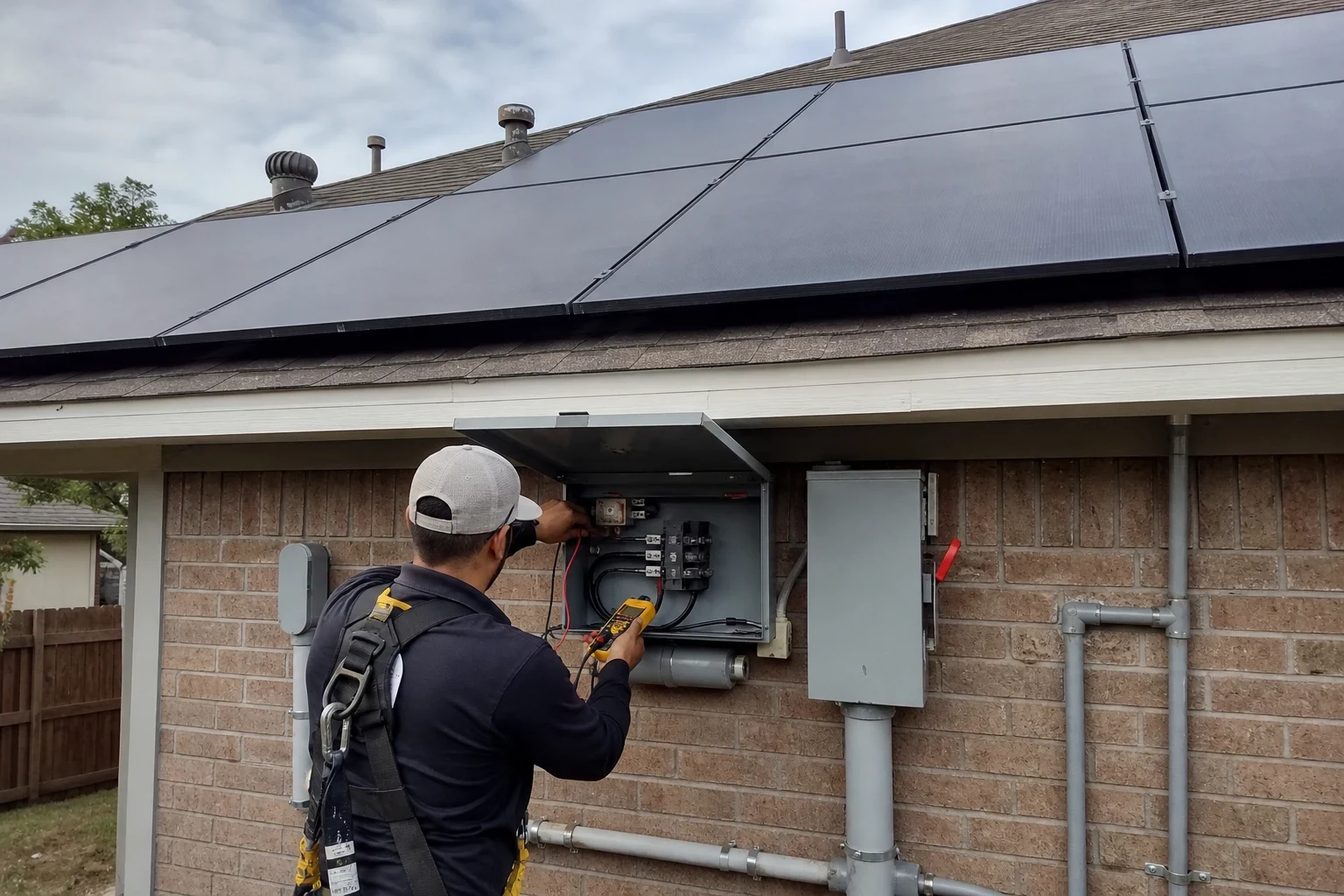
Solar Repair
Diagnosis and repair for underperforming or silent solar systems, from inverter faults and chewed wiring to cracked panels and leaking mounts.
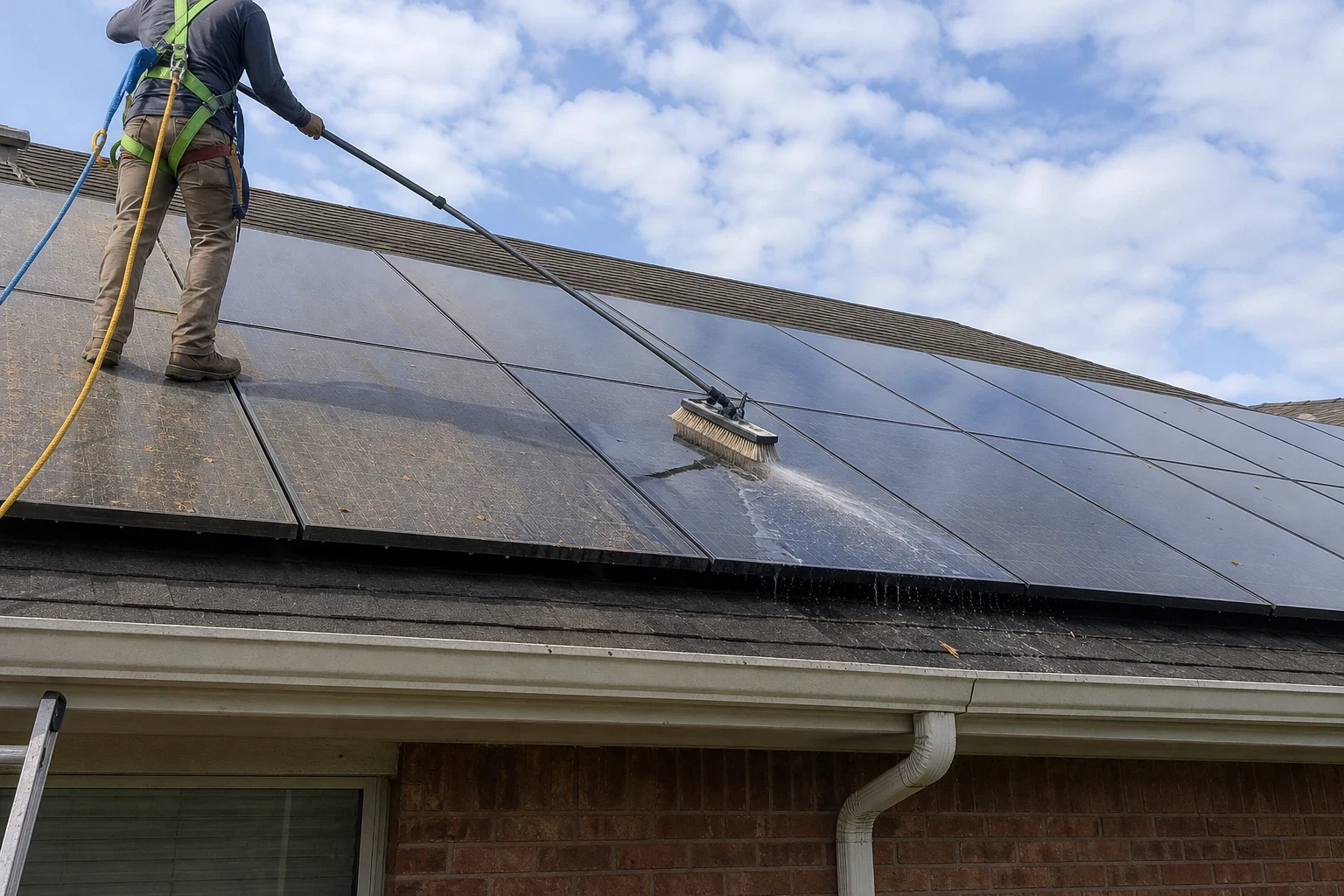
Panel Cleaning
Careful rinse-and-brush cleaning with purified water that clears dust, pollen and droppings without scratching the glass or stressing the seals.
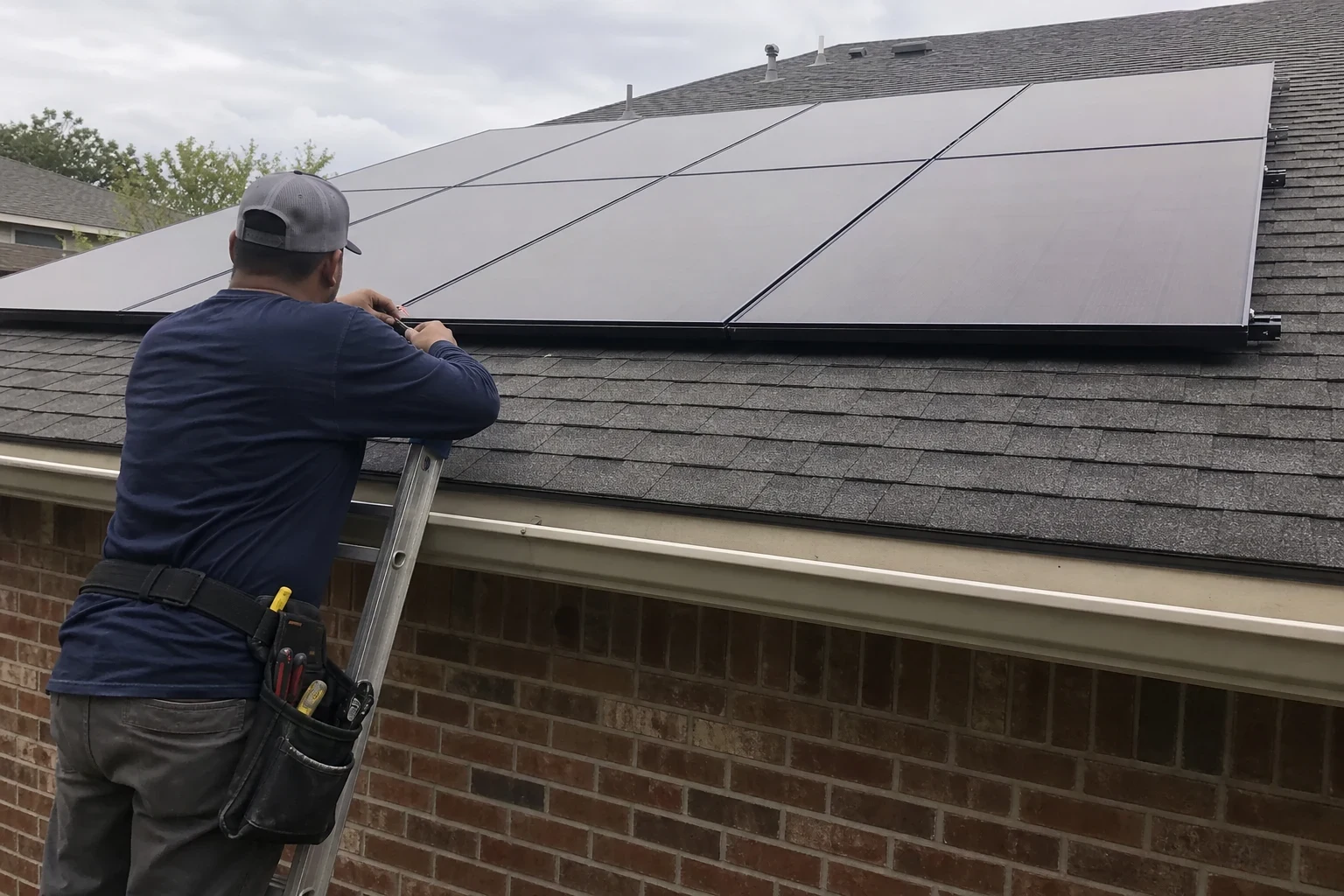
Roof-Mounted Solar
Panels mounted to your roof with flashed attachments, straight rails and wiring kept off the shingles, planned around the roof you have.
What Sets Our Work Apart
Texas heat, hail and sun work on a solar system for decades. How it holds up comes down to the hidden parts of the job, and that is where our hours go.
- 01
Each roof attachment sealed the right way
Flashing goes under the shingle course at every mount, with a sealant matched to your roof material instead of a spot of caulk on the surface. One leaking lag bolt can hide for years, so each attachment gets full attention.
- 02
Wiring that stands up to inspection
Wires are clipped to the rails, held clear of the roof and run so the wind cannot rub them. Conduit runs straight and gets painted to match the house where that helps, and each disconnect and junction carries a label for whoever opens it next.
- 03
Safety that others have recognized
Working on roofs takes care. The way our crews handle safety earned the Liberty Mutual Platinum Safety Award, and the habits that protect our installers also protect your roof and yard while we work.
- 04
Honest answers before you sign
If your roof is close to worn out or sits in afternoon shade, you hear it from us up front. Your estimate is written out line by line, showing the cost of each part and why it is included.
- 05
A tidy yard every evening
We cover paths and plantings, gather screws and wire scraps by hand and sweep the lawn with a magnet. The only sign we were there should be on your roof and at your electrical panel.
Our Service Area
Our crews install and maintain solar across Garland and the towns next door, among them Rowlett, Sachse, Richardson, Murphy and Sunnyvale, plus Plano, Mesquite, Wylie, Rockwall and Balch Springs. Permit rules shift a bit from city to city, and we handle the filing in whichever one you live in.
- Garland
- Rowlett
- Sachse
- Richardson
- Murphy
- Sunnyvale
- Plano
- Mesquite
- Wylie
- Rockwall
- Balch Springs
Live just past one of these towns? Bring up your address when you call and we will tell you honestly whether it is in reach.
What Shapes the Cost of a Solar System
Every system is priced from the roof it will sit on and the power your household actually uses, so two neighbors on the same street can end up with quite different figures. The factors below carry the most weight. We go over each one with you on the phone, then again in writing once we have seen the house.
Your estimate is written out line by line after we look at your roof, your panel and your usage history. If something changes once work begins, we show you photos and talk it over before going further.
- System size
- The number of panels follows from how much electricity your home uses over a full year, including those long summer months of air conditioning. A larger system costs more up front and offsets more of your bill.
- Roof shape and pitch
- An open roof plane facing south or west goes faster than one broken up by valleys, dormers and vent stacks. Steeper roofs and two-story homes call for extra fall protection and staging, and that shows up as labor time.
- Roof condition
- Panels stay put for decades, so the roof under them matters. If yours needs replacing soon, it usually makes sense to handle that first, and we will say so plainly rather than install over a problem.
- Equipment choices
- Panel brand, string inverters versus microinverters, and the racking system all change the price. We explain the trade-offs in plain terms so you can choose what fits your goals.
- Battery storage
- Adding a battery is optional and depends on whether you want backup power during outages, how much of your home it should run and where it can be mounted.
- Electrical panel and permits
- Some older electrical panels need an upgrade before solar can connect. Permit and utility interconnection steps also vary by city, and we include that work in the estimate rather than adding it later.
The Steps From First Call to Power
Planning and paperwork take up most of a solar project. Next to that, the install is brief and fairly quiet.
- 1
We start on the phone
Tell us about your roof, your power bills and what you hope solar will do. If the fit looks right, we book a visit.
- 2
A visit and a layout
On site we measure the roof, track shade across the day, check the attic framing we can get to and look over your electrical panel. Then we sketch the layout and write up your estimate.
- 3
Permit and utility filings
We file for the city permit and put together the interconnection forms your electric company asks for. We keep you posted on where things stand, so you never have to call around for updates.
- 4
The install
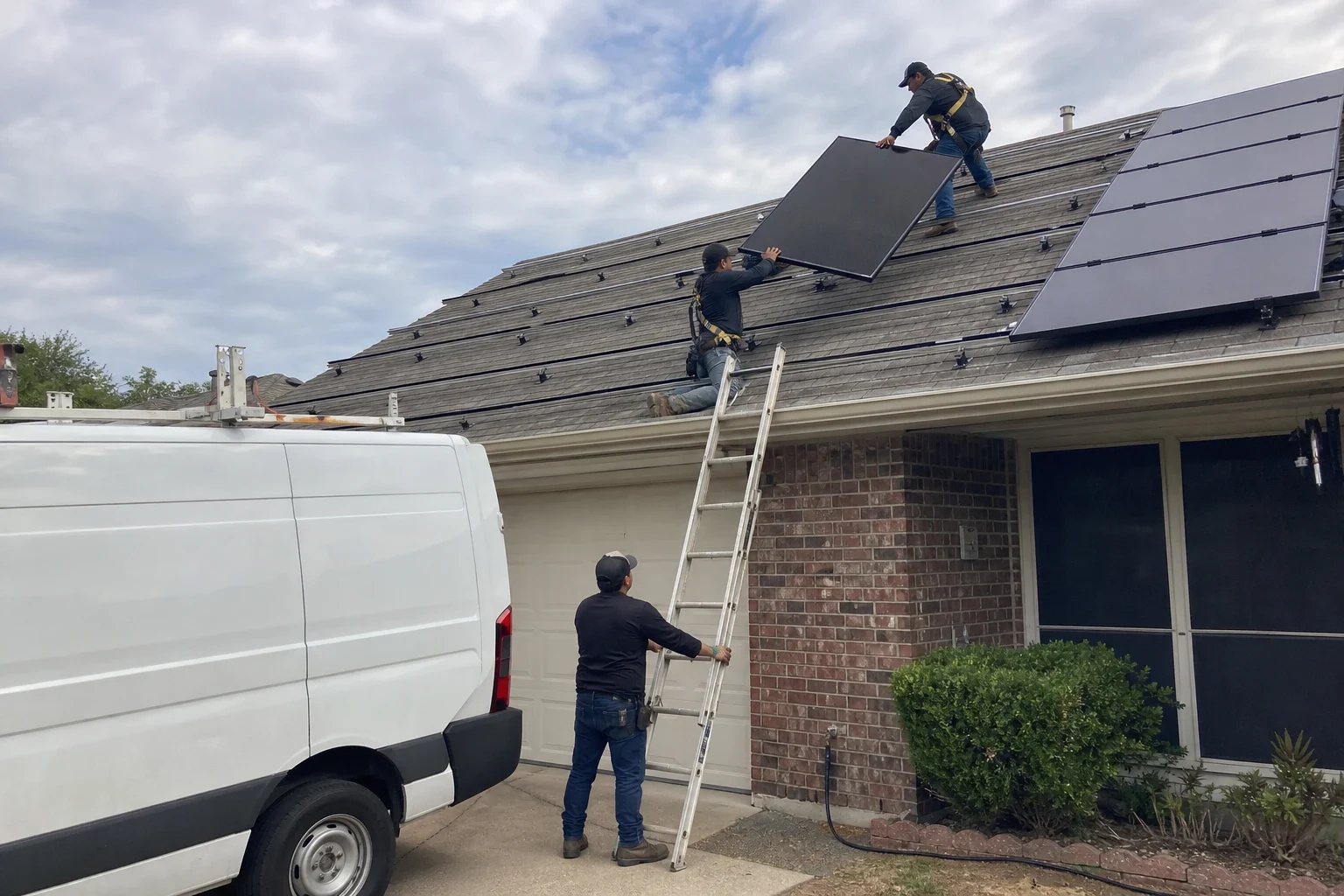
Our crew covers what needs protecting, sets and seals each mount, puts up the rails and panels, and finishes the wiring to the inverter and your electrical panel. One or two days covers most homes, and we show you around the system before we go.
- 5
Sign-off and first power
After the city inspector approves the work and the utility clears the system to run, we turn it on, confirm every part is producing and set up the monitoring app on your phone.
A Solar Company That Sweats the Small Things
Garland Solar Installation works on homes across Garland and the surrounding area. We keep our focus narrow on purpose: solar panels, battery storage, and the repair and cleaning that keep those systems producing.
We have seen what happens when a system is rushed. Loose wire hanging under the array, mounts sealed with whatever was in the truck, conduit zigzagging down the side of a house. Those shortcuts show up later as leaks, faults and lost production. The way we work is meant to prevent that, one bolt and one connection at a time.
- Certifications
- Liberty Mutual Platinum Safety Award
Questions We Hear From Garland Homeowners
- How do I know if my roof will work for solar?
- Roof sections that face south or west and sit mostly clear of shade from trees and buildings tend to produce the most, though east-facing roofs often perform well too. On our visit we look at the pitch, the shade and the framing, then give you an expected production figure before you decide anything.
- Can solar panels make my roof leak?
- Not when the mounts go in correctly. At each attachment we tuck flashing beneath the shingles and apply a sealant rated for your type of roof. It is slower than the shortcuts some crews take, and it is the main thing that keeps the roof under an array dry.
- Is your installation work backed by a warranty?
- Yes. Our solar work carries a 10-year workmanship warranty. Panels, inverters and batteries are covered separately by their makers, and before work begins we explain which warranty covers which part.
- How often do panels need a cleaning?
- Once or twice a year is enough for many systems, with more frequent visits near busy roads, construction or trees that shed pollen and leaves. Dust and bird droppings can lower output without anyone noticing. We clean with soft brushes and purified water, never a pressure washer or harsh soap that might scratch the coating.
- Will hail hurt my solar panels?
- Good panels have tempered glass made to handle normal hail, and most get through storms undamaged. After a bad storm we can inspect the array, photograph any damage and make repairs. Your adjuster decides coverage, and we can explain what we found in plain language.
- Is a battery required?
- No. Solar runs fine without one. A battery is worth it if you want power during outages or more say over when you use your own energy. We go over your goals and recommend one only when it fits.
- How long does an installation take?
- Most homes have our crew on site for one or two days. Permits, the inspection and utility approval add time before the system can be turned on, and we keep you updated throughout.
- Will you repair a system put in by another installer?
- Yes. We service most systems, including ones from companies that have closed. We track down the real fault first, then give you a written repair estimate before any work starts.
Talk Through Your Solar Plans
Share a little about the house, the roof over it and what you pay for power each month. We will describe what a carefully built system might look like for you and lay out the next steps.