ServicesBattery Storage
Battery Storage in Garland
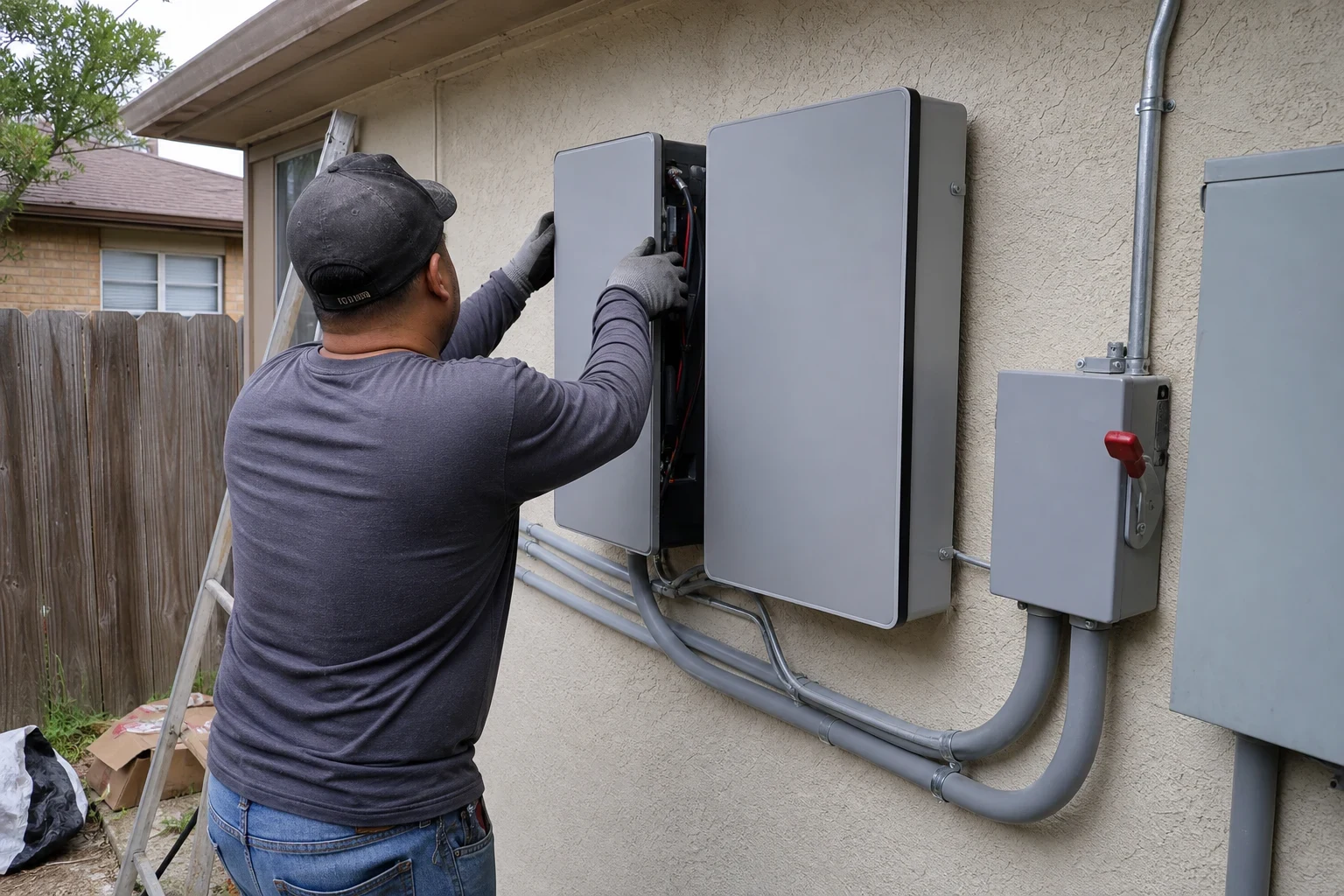
Storage lets the energy your roof produces carry into the evening and through outages. We size the battery to your home, mount it where heat and weather won't wear it down early, and wire it so the switch to backup happens cleanly.
What a Home Battery Does for You
Most grid-tied solar systems shut off during an outage. That is a safety rule, so line workers are not hit by power feeding back into the grid. Storage removes that limit. A gateway or transfer switch isolates your home from the utility lines, and from there the battery and panels keep your refrigerator, lights, internet and other chosen circuits on.
On ordinary days the battery earns its place too. It can soak up midday solar and release it in the evening, when your home uses the most and the panels have gone quiet.
How long a battery lasts depends less on the brand than on the installation. Where it hangs, how hot it gets, how the conduit is run and how the circuits are split all matter. We give those details the same attention as the battery itself.
What Our Battery Work Includes
A load review before any design
We go through your electrical panel and ask how you live: which rooms, which appliances, what has to stay on. That tells us whether you need partial backup or something closer to whole-home.
A dedicated backup panel when it makes sense
For partial backup, we move your essential circuits into a separate subpanel. It keeps the battery from being drained by loads you can live without for a day.
Placement chosen for heat and clearance
Lithium batteries age faster when they sit in heat. We look for a shaded exterior wall or a spot in the garage with airflow, keep the clearances the manufacturer and code require, and keep it out of the path of cars and lawn equipment.
Neat, protected wiring
Conduit is run square to the wall, strapped at proper spacing and sealed where it passes through siding. Every breaker and disconnect is labeled so you or a future electrician can read the system at a glance.
Existing arrays or new ones
Storage can be retrofitted to the panels already on your roof, or planned alongside a new array from the start. If new panels are part of the plan, our solar panel installation page covers how we lay out the array.
Setup, testing and a walkthrough
We configure the battery's settings, simulate an outage to confirm the switchover, and show you how to read the app and what the indicators mean.
Signs a Battery Is the Right Call
- Outages leave your solar idle
- If the power went out and your panels did nothing, that is expected without storage. A battery is what lets your solar keep working when the grid is down.
- Storms worry you more than bills
- Summer storms and winter freezes both knock power out across North Texas. If keeping the refrigerator cold, a medical device running or the house livable is the priority, backup is worth a look.
- You export a lot of midday power
- When your panels make far more than you use at noon, storing that energy for the evening can make more of the system you already paid for.
- Someone at home depends on power
- Home offices, CPAP machines, well pumps and sump pumps are all good reasons to keep specific circuits live.
- You are adding solar anyway
- Designing panels and storage together is simpler than retrofitting later, and the wiring can be planned once.
How a Battery Installation Runs
- 1
Home visit and load review
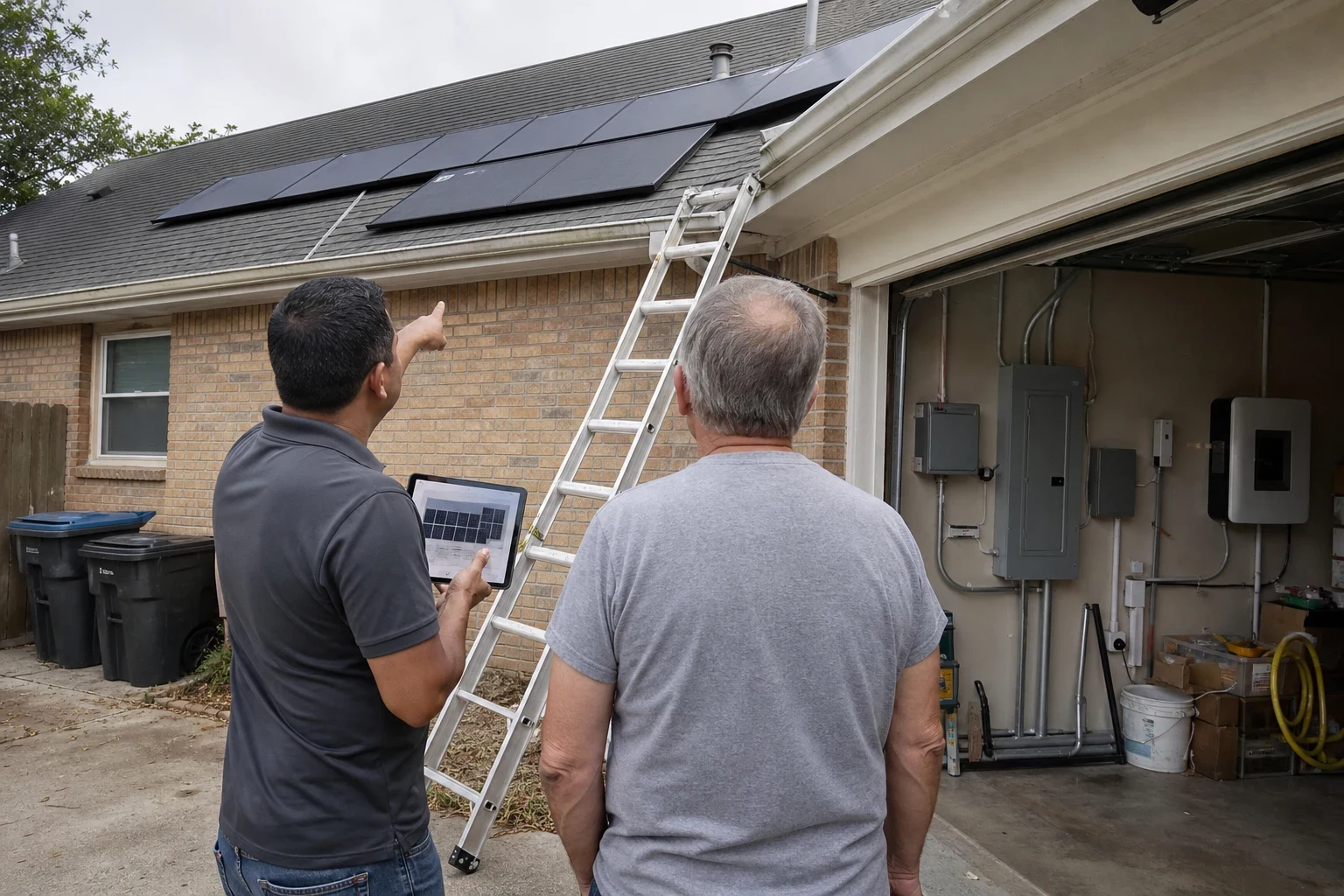
We look at your panel, your solar if you have it, and the walls where a battery could go. We measure the conduit run and note anything that affects the plan.
- 2
Design and permit
You get a clear proposal showing battery capacity, which circuits are backed up and where everything mounts. We handle the permit and the paperwork with your electric utility.
- 3
Installation day
Most jobs take a day, sometimes two with a panel change. Power to your home is off for part of that time, and we tell you when in advance. Our crew holds the Liberty Mutual Platinum Safety Award, and battery work, with heavy units and live circuits, is where those safety habits count most.
- 4
Inspection and commissioning
After the city inspection, we power the system up, run an outage test and walk you through how it behaves. We leave the work area as clean as we found it.
What Shapes the Cost of a Battery
Battery pricing depends on how much backup you want and how your home is wired today. We go through the factors on your visit and put them in writing, line by line, so nothing appears later as a surprise.
- Capacity and number of units
- More stored energy means more hours of backup or more circuits covered. Some homes need one unit, others two or more.
- Partial or whole-home backup
- Covering a few essential circuits costs less than backing up central air and an electric range, which draw heavy current.
- Your existing solar equipment
- Some inverters pair directly with a battery; others need added equipment to connect. We check what you have before recommending anything.
- Electrical panel condition
- An older or full panel may need upgrading or a new subpanel to handle backup safely.
- Mounting location and conduit run
- A long run from the panel to a shaded wall, or extra protection for a garage install, adds material and labor.
Battery Storage Questions
- My panels are already up. Will a battery work with them?
- In most cases it will. The inverter you have now decides how the battery ties in, and some setups need an extra piece of equipment to connect. We check your system on the visit and explain plainly what the job would involve.
- Will a battery run my air conditioner?
- It can, but central air draws a lot of power and will drain a single battery quickly. Many homeowners back up a smaller set of circuits and accept a warmer house during an outage. We show you the tradeoff in hours so you can choose.
- How long will my home stay powered in an outage?
- That depends on battery size, what is running and how much sun your panels get during the outage. With solar recharging during the day, a well-sized system can keep essential circuits going for days.
- Is it safe to put a battery in a hot Texas garage?
- It can be, with the right spot. Heat shortens battery life, so we avoid west-facing walls in full sun, keep clearances for airflow and follow the manufacturer's temperature limits.
- Do I need a permit for a home battery?
- Yes. Battery installations need an electrical permit and an inspection, and your utility needs to know about the change. We pull the permit and handle the utility paperwork.
Plan Backup That Fits Your Home
Tell us which circuits matter and what your current setup looks like. We will talk through capacity, placement and what the visit involves.